How Does Feed Impact Water Quality in Aquaculture?

Time:2026-10-17 Author:Oliver
0%

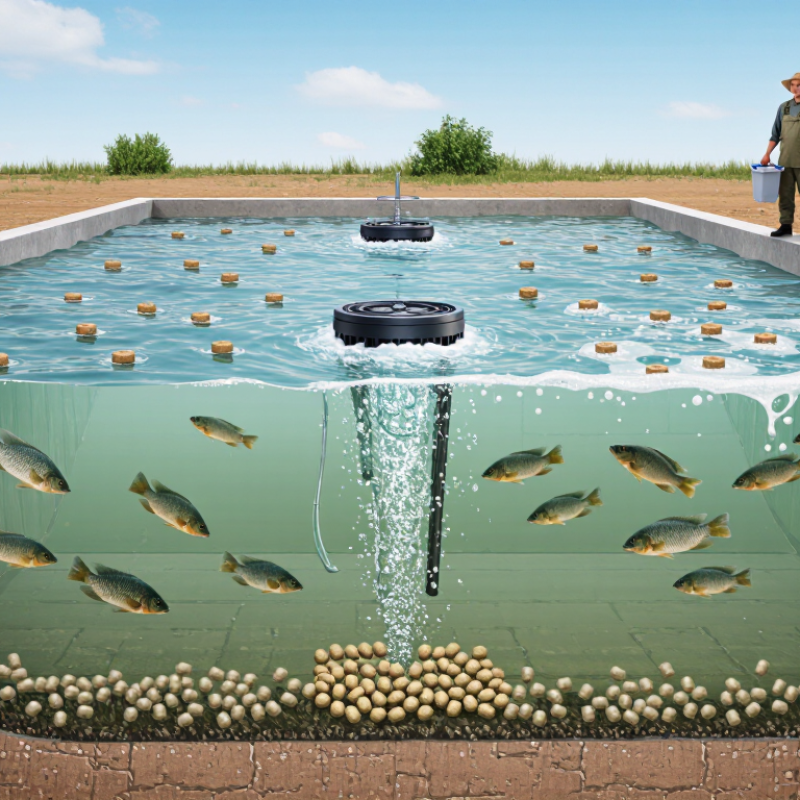
How does feed impact water quality is a central question in modern aquaculture. Feed supplies growth nutrients, but unused nutrients also enter the culture environment. Uneaten pellets settle on pond bottoms, where microbes decompose them. This process consumes dissolved oxygen and releases ammonia, carbon dioxide, and other metabolites.

Aquaculture water-quality specialist Claude E. Boyd has stated, “Feed is the most important source of nutrients in aquaculture ponds.” His observation remains highly practical. A feeding mistake can become visible within hours. Water may turn cloudy, foam may collect near aerators, and fish may gather at the surface. These signs can indicate oxygen stress or excessive organic loading.

Good feed management begins with accurate biomass estimates and careful observation. Farmers should adjust daily rations when temperature, fish appetite, or oxygen levels change. Feed conversion ratio, uneaten pellets, ammonia, nitrite, pH, and dissolved oxygen should be reviewed together. One measurement rarely tells the full story. Feed quality matters too. Poorly digestible ingredients can increase fecal waste and nutrient discharge, even when feeding rates appear reasonable.

No feeding chart is perfect. Weather shifts. Fish behavior changes. Farm records may also contain gaps. That reality deserves attention, not denial. Experienced operators combine laboratory testing with direct observation, including checking pond edges after feeding. Responsible feed decisions can improve fish health, reduce waste, and protect receiving waters. Yet feed is only one influence. Stocking density, aeration, pond sediments, water exchange, and biosecurity also shape the final outcome.
How Does Feed Impact Water Quality in Aquaculture?

What Is the Role of Feed in Aquaculture Water Quality?

Feed is not merely a growth input; it is a daily water-quality driver. Fish digest only part of each pellet. The remaining nutrients enter the pond through feces, uneaten feed, and dissolved waste. Organic matter then increases microbial oxygen demand. Ammonia and phosphate may also rise, especially after heavy feeding during warm weather.

The scale is significant. FAO’s The State of World Fisheries and Aquaculture 2024 reported 94.4 million tonnes of farmed aquatic animals in 2022. Such production depends on precise feed management, because small daily losses multiply across large farms.

A practical measure is feed conversion ratio, or FCR. A rising FCR can signal poor pellet stability, overfeeding, stress, or weak water circulation. It is not only a cost problem.

Watch the water closely.

In a pond, uneaten pellets may soften near the feeding tray within minutes. A sharp oxygen decline can follow overnight, when photosynthesis stops. Feed size, sinking speed, protein level, and feeding frequency all influence this outcome.

FAO technical guidance on aquaculture feed management emphasizes matching rations with biomass, temperature, and appetite.

However, feeding tables are not perfect. They may overlook disease, weather changes, or uneven fish size.

A useful routine combines feed records with dissolved oxygen, ammonia, nitrite, alkalinity, and turbidity readings. Operators should adjust cautiously, not react to one unusual test.

Better feed efficiency usually means less nutrient discharge, but feed alone cannot repair poor aeration or excessive stocking. The uncomfortable lesson is simple: water quality often reveals feeding mistakes before production records do.

How Does Uneaten Feed Affect Aquaculture Water?

How Does Feed Impact Water Quality in Aquaculture?

Uneaten feed can change aquaculture water within hours. Pellets soften, break apart, and settle beneath feeding areas. Bacteria then decompose this organic material and consume dissolved oxygen. Fish may gather near the surface and show rapid breathing. The water can also become cloudy, with an earthy or sour smell.

During routine pond checks, I compare feeding trays with early-morning water readings. Low oxygen often appears before ammonia becomes obvious. Decomposition may raise ammonia and nitrite, while released nutrients encourage excessive algae growth. Algae can produce oxygen during daylight, but consume it after sunset. This daily swing is easy to miss. I once blamed poor aeration for unstable oxygen, although overfeeding was the deeper problem.

Feed records should match fish appetite, water temperature, and biomass estimates. Observing feeding behavior helps, but it is not perfectly reliable. Wind, noise, and competition can hide slower fish. Removing uneaten pellets after a short interval can reduce waste and bottom accumulation. Regular tests for dissolved oxygen, ammonia, nitrite, pH, and alkalinity provide stronger evidence. Small adjustments matter. A slightly smaller ration may protect water quality without reducing growth. Still, feeding decisions should be reviewed against actual weight gain, not appearance alone.

How Does Feed Impact Water Quality in Aquaculture? — How Does Uneaten Feed Affect Aquaculture Water?
Water-Quality Dimension Typical Operational Reference How Uneaten Feed Affects the Water Primary Biological Process Potential Risk Recommended Management Response
Dissolved Oxygen (DO) Generally maintain above 5 mg/L for many intensively cultured species; species-specific limits apply. Microbial decomposition of leftover feed consumes oxygen. Oxygen can decline rapidly near the pond bottom, feeding area, or tank solids zone. Aerobic microbial respiration and decomposition of organic matter. High when feed accumulates during warm weather, at night, or under weak water circulation. Reduce the next ration, remove settled solids, improve aeration and circulation, and monitor DO before dawn and after feeding.
Biochemical Oxygen Demand (BOD) Lower BOD generally indicates a lower load of biodegradable organic matter. Uneaten feed increases the amount of biodegradable material, causing a higher oxygen demand and greater pressure on aeration capacity. Bacteria break down proteins, carbohydrates, and lipids in feed particles. High if feed remains uneaten for extended periods or accumulates in sediments. Use feed trays or cameras, shorten feeding windows, distribute feed evenly, and remove organic waste routinely.
Total Ammonia Nitrogen (TAN) Keep TAN as low as practical; interpretation depends on pH, temperature, salinity, and species. Protein in decomposing feed is converted into ammonia, increasing the nitrogen load in the culture water. Mineralization of organic nitrogen followed by ammonia release. High in heavily fed systems with insufficient biofiltration, water exchange, or nitrification. Reduce excess feed, maintain effective biofiltration, control pH, remove solids, and test TAN regularly.
Unionized Ammonia (NH3) Keep as close to zero as possible; toxicity increases as pH and temperature rise. Uneaten feed can raise TAN, while warm and alkaline water increases the more toxic unionized fraction. Ammonia equilibrium between NH3 and NH4+. High because even a moderate TAN level can become more hazardous at high pH and temperature. Measure TAN together with pH and temperature; improve aeration and biofiltration, and stop overfeeding immediately.
Nitrite (NO2−) Freshwater operations commonly aim to keep nitrite below approximately 0.5 mg/L, with lower levels preferred. Extra ammonia from decomposing feed can exceed the capacity of nitrifying bacteria and contribute to nitrite accumulation. Incomplete nitrification during biological filter overload or unstable biofilter operation. High when biofilters are immature, overloaded, oxygen-limited, or exposed to sudden feed increases. Lower feed input, maintain strong biofilter aeration, remove solids, and consider chloride management where appropriate for freshwater species.
Total Suspended Solids (TSS) Maintain the system-specific target needed for fish comfort, gill health, and filter performance. Uneaten pellets break apart into fine particles that remain suspended or settle as organic sludge. Physical fragmentation, water movement, and microbial breakdown of feed particles. Medium to high in tanks or ponds with poor solids capture and excessive feeding. Improve mechanical filtration, siphon settled waste, prevent pellet disintegration, and avoid feeding during excessive turbulence.
Water Clarity and Turbidity Maintain clarity appropriate for the cultured species and production system; avoid persistent turbidity. Fine feed particles and decomposed organic matter increase turbidity and can reduce visibility during feeding. Suspension of feed fines, microbial flocs, and disturbed bottom sediments. Medium; persistent turbidity can interfere with feeding observation and gill function. Use appropriately sized, water-stable pellets, improve solids removal, and adjust feed delivery to reduce fines.
pH and Alkalinity Many freshwater species perform well near pH 6.5–8.5, but the optimum is species- and system-specific. Decomposition and nitrification can consume alkalinity and cause pH instability. Higher pH also increases the toxic fraction of ammonia. Microbial acid production during organic decomposition and nitrification. Medium; risk increases when alkalinity is low and feed loading is high. Monitor pH and alkalinity, maintain adequate buffering capacity, and make feed increases gradually.
Phosphate and Eutrophication Pressure Keep dissolved nutrients controlled according to the system’s water-exchange and algae-management strategy. Phosphorus released from uneaten feed can stimulate excessive algae or phytoplankton growth. Solubilization of feed phosphorus and nutrient recycling from organic waste. Medium to high in ponds or recirculating systems with limited nutrient export. Improve feed efficiency, remove solids, manage water exchange, and monitor algae biomass and nutrient trends.
Sediment Organic Matter Avoid visible feed accumulation, black anaerobic zones, and persistent sludge deposits. Settled feed enriches the bottom with organic matter and can create oxygen-depleted zones. Anaerobic decomposition and accumulation of organic sludge. High in pond corners, beneath feeders, and in poorly circulated tank areas. Relocate feeding points when necessary, remove sludge, improve bottom circulation, and prevent repeated overfeeding.
Feed Waste Indicator A practical management target is to keep visible uneaten feed below about 5% of the offered ration; the exact target depends on species and system. Increasing uneaten feed is an early warning that ration size, pellet size, feeding speed, or feed distribution needs adjustment. Mismatch between feed offered and actual appetite or feed accessibility. Medium; continued waste can progressively degrade multiple water-quality parameters. Check feeding response, use demand feeders or feed trays, adjust ration gradually, and record feed intake against biomass gain.
Feed Conversion Ratio (FCR) Lower FCR generally indicates more efficient use of feed; expected values vary substantially by species, life stage, and system. Uneaten feed increases feed input without producing biomass, worsening FCR and increasing nutrient waste per unit of production. Reduced feed utilization and increased excretion or decomposition of unused nutrients. Medium; persistent FCR deterioration often signals overfeeding or poor feed management. Review biomass estimates, pellet size, feeding frequency, water temperature, health status, and feeding records.
Reference note: Actual safe limits vary by species, life stage, salinity, temperature, pH, stocking density, and production system. Water-quality decisions should use site-specific monitoring rather than a single universal threshold.

How Do Feed Nutrients Change Water Chemistry?

In aquaculture, feed is more than a growth tool; it is a chemical input to the water. When fish digest protein, nitrogen leaves their bodies through waste. Microbes then convert organic nitrogen into ammonia, nitrite, and nitrate. Toxicity depends on pH, temperature, and the proportion of un-ionized ammonia. A warm afternoon can make the same ammonia reading more dangerous. I have seen clear water hold worrying ammonia levels. Appearance can mislead.

Uneaten pellets create another pathway. As feed softens on the pond bottom, bacteria consume oxygen while breaking it down. This process may lower dissolved oxygen before dawn, when oxygen is already limited. Phosphorus from feed can stimulate algae growth, especially in shallow ponds with weak water exchange. A green bloom may produce oxygen in daylight, then consume it at night. pH can swing between morning and afternoon. These changes affect fish stress and management decisions.

Feed management should connect daily ration records with water tests. Check ammonia, nitrite, pH, alkalinity, temperature, and dissolved oxygen at consistent times. Compare feeding response with leftover feed, not just fish appetite. Small adjustments can reduce waste, but the correct ration is rarely fixed. Fish size, weather, biomass, and water exchange keep changing. I still question simple cause-and-effect assumptions. A sudden pH shift may involve algae, alkalinity, or poor aeration, not feed alone. Good records make that uncertainty useful.

Which Water Quality Problems Result from Poor Feed Management?

How Does Feed Impact Water Quality in Aquaculture?

Which Water Quality Problems Result from Poor Feed Management?

Poor feed management can turn clear water into a cloudy, oxygen-poor system. Uneaten pellets soften on the pond floor and release nitrogen and phosphorus as they decompose. Bacteria consume oxygen during this process. Fish then gather near aerators, gasp at the surface, or stop feeding. These are practical warning signs, not minor changes.

The FAO’s 2024 State of World Fisheries and Aquaculture report recorded 94.4 million tonnes of farmed aquatic animals in 2022. This scale increases the importance of nutrient control. Excess nitrogen can raise ammonia levels, while bacterial conversion may increase nitrite. Phosphorus can stimulate dense algal growth. When algae die, decomposition may create sharp nighttime oxygen declines. Water may look green and healthy, yet conditions can deteriorate before morning. That assumption deserves more caution.

How Can Farmers Manage Feed to Protect Water Quality?

Feed affects water quality through every uneaten pellet and fish waste. When feed is excessive, organic matter settles on pond bottoms. Microbial breakdown then consumes oxygen and may raise ammonia. Clear water can still hide these problems.

Farmers can manage feed by matching portions with biomass, water temperature, and fish activity. Fish should finish most feed within 10 to 15 minutes. Watch the surface closely. Slow feeding often signals stress, low oxygen, disease, or poor water conditions. Do not add more feed simply because the scheduled amount remains. During cloudy weather or sudden temperature changes, a smaller ration may be safer. Reliable records also help. Note feed quantity, feeding response, mortality, dissolved oxygen, ammonia, nitrite, and pH. These details connect management decisions with real pond changes.

Tips: Store feed in a cool, dry place, away from walls and chemicals. Check its smell, texture, and expiration date before use. Remove damaged or stale feed. Use trays or fixed feeding points to measure leftovers. Test water at consistent times, especially before dawn when oxygen may be lowest. Automatic feeders can improve consistency, but they still require observation. No system replaces careful judgment. A practical weakness is assuming one feeding schedule will work all season. Fish growth changes, and water responds slowly. Review the plan weekly, then adjust cautiously rather than making large changes.

How Does Feed Impact Water Quality in Aquaculture?

Accurate feeding improves feed conversion and reduces the amount of nitrogen released into the culture water. The chart estimates nitrogen discharged for every 1,000 kg of fish harvested under different feed-management outcomes.

Calculation basis: 35% protein feed, nitrogen content estimated as protein divided by 6.25, and 25% of feed nitrogen retained in harvested fish. Actual values vary with species, feed formulation, temperature, feeding rate, and system design.

FAQS

How does feed affect aquaculture water quality?

Feed adds nutrients to the pond through feces, uneaten pellets, and dissolved waste. Bacteria decompose this material and consume dissolved oxygen. Ammonia, nitrite, and phosphate may also increase.

What happens to uneaten pellets?

Pellets soften near feeding areas within minutes. They break apart and settle on the bottom. Decomposition can create cloudy water, bad smells, and oxygen loss.

Why can oxygen decline overnight?

Algae produce oxygen during daylight but consume oxygen after sunset. Decomposition also continues overnight. Low oxygen often becomes most serious before dawn.Very easy to miss.

Which water problems can poor feeding cause?

Poor feeding can increase ammonia, nitrite, turbidity, and algal growth. Fish may gather near aerators, breathe rapidly, or stop feeding. Clear green water is not always safe.

How can farmers recognize overfeeding?

Watch for leftover pellets, reduced appetite, rising feed conversion ratio, and sudden water changes. Check feeding trays after a short interval. Small daily waste can accumulate quickly.

How should feeding amounts be adjusted?

Match rations with biomass, temperature, and recent consumption. Consider weather, disease signs, and uneven fish sizes. Reduce feeding cautiously when appetite or oxygen levels decline.Tables are not perfect.

Which water tests should accompany feed records?

Record dissolved oxygen, ammonia, nitrite, pH, alkalinity, and turbidity. Measure oxygen before dawn and after feeding. Compare test results with actual weight gain.

Can better feed efficiency solve every water-quality problem?

No. Efficient feeding reduces nutrient discharge, but it cannot fix weak aeration or excessive stocking. Water quality may reveal feeding mistakes before production records do.

What is one practical feeding routine?

Estimate biomass regularly and observe feeding behavior closely. Remove uneaten pellets soon after feeding. Keep simple daily records and review them against measured water conditions.I once blamed aeration alone.

Conclusion

How does feed impact water quality in aquaculture? Feed is a major factor because it supplies nutrients for fish and shrimp growth while also influencing the amount of waste entering the culture system. When feed is properly balanced and applied at the right rate, animals can use more of its nutrients, reducing pollution and supporting stable water conditions. However, uneaten feed can break down and release organic matter, ammonia, and other compounds that increase oxygen demand and encourage harmful microbial activity.

Excess nutrients from feed may also raise nitrogen and phosphorus levels, promote algal blooms, reduce dissolved oxygen, and cause unpleasant changes in water chemistry. Poor feed management can therefore lead to cloudy water, unstable pH, toxic ammonia or nitrite, and stressed or unhealthy animals. Farmers can protect water quality by selecting suitable feed, adjusting portions to biomass and weather conditions, observing feeding behavior, removing leftovers when possible, and regularly monitoring oxygen, pH, ammonia, and other key indicators.

Oliver

Oliver

Oliver is a seasoned marketing professional with a wealth of expertise in driving brand awareness and engagement. With a deep understanding of our company's product offerings, he consistently delivers high-quality content that enriches our professional blog. His insights not only shed light on......