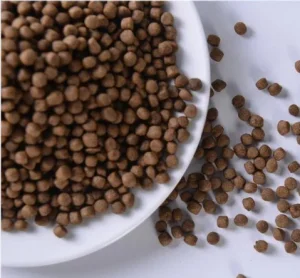
Valine Feed Additive Reduce Fcr & Stress Ideal for Poultry/Swine/Aquaculture

Still deciding? Get samples of $ !
Request Sample

Product Description

Basic Specifications

Model NO.
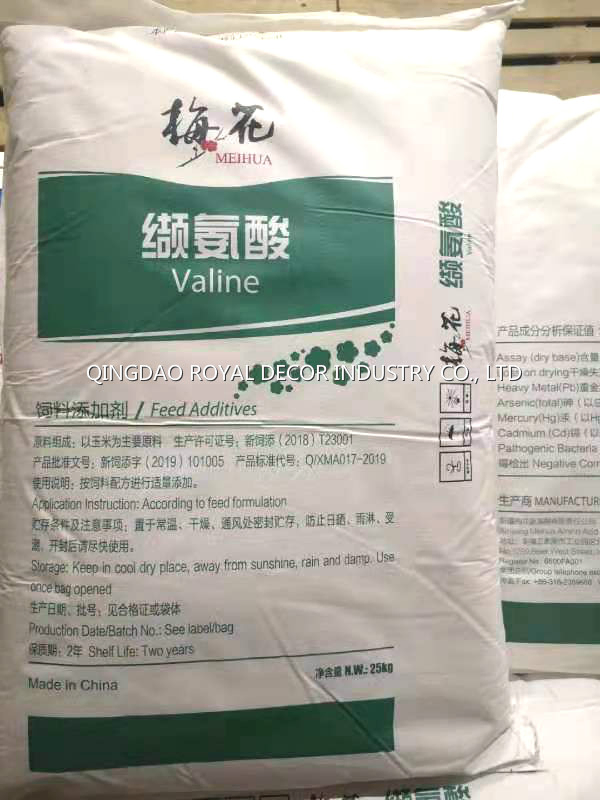
L- Valine
Type
Amino Acid
Storage Method
Dry Ventilate and Shady
Color
White
Shelf Life
2 Years
CAS No
72-18-4
Function
Amino Acid Additives
Transport Package
25kg Package
Specification
98%
Origin
China
HS Code
2922419090
Production Capacity
4000tons/Year

Product Details

1. Basic Characteristics

  • Chemical Name: L-Valine
  • Classification: Essential amino acid (a branched-chain amino acid, BCAA)
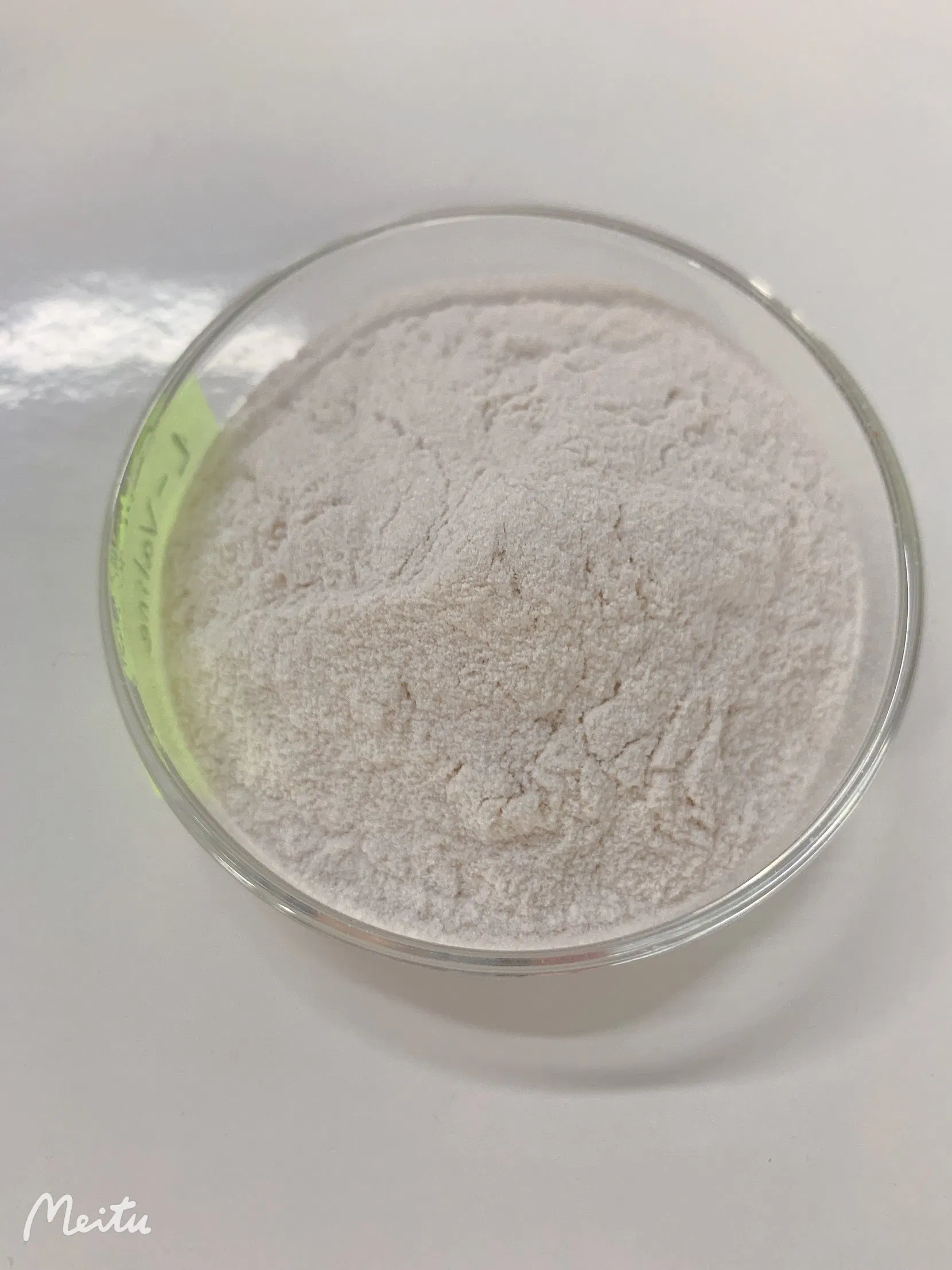
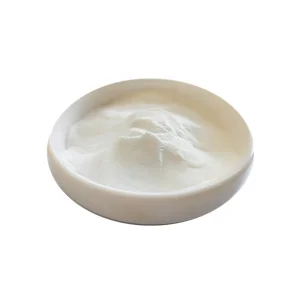
  • Appearance: White crystalline powder, odorless, slightly sweet
  • Solubility: Highly soluble in water
Product Name:L-valine MF:C5H11NO2
CAS No.:72-18-4 Purity:99%
EINECS No.:200-773-6 Origin:China
ItemSpecification
AppearenceWhite Crystal Powder
Purity98%min
Chloride(CI)≤0.05%
Sulfate (SO4)≤0.03%
Iron(Fe)≤30ppm
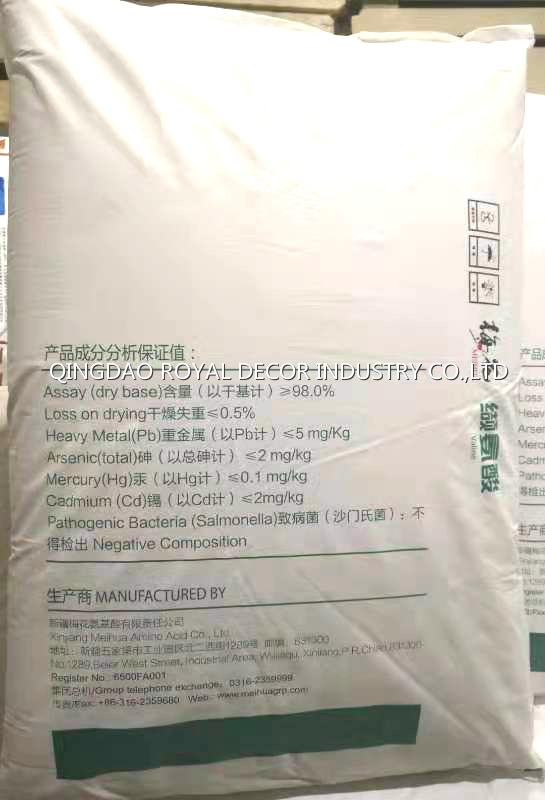
Heavy metals(Pb)≤15ppm
Arsenic (As)≤1.5ppm
Loss on drying≤0.30%
Residue on ignition≤0.10%
Organic Volatile impuritiesConforms

2. Functional Roles

  • Protein Synthesis: Critical for muscle growth and tissue repair.
  • Energy Metabolism: Serves as an energy source during stress.
  • Feed Efficiency: Optimizes amino acid balance.
  • Immune Support: Enhances disease resistance.
  • Stress Reduction: Mitigates growth retardation from environmental stress.

3. Target Animals & Dosage

  • Poultry: Improves weight gain and egg production (0.1%-0.3%).
  • Swine: Reduces diarrhea in piglets (0.15%-0.25%).
  • Aquaculture: Stimulates feeding and growth (0.2%-0.5%).
  • Ruminants: Required for young calves.

4. Deficiency & Excess Risks

  • Deficiency: Stunted growth, poor appetite, muscle loss.
  • Excess: May disrupt amino acid balance and metabolic burden.

5. Synergistic Interactions

Optimal ratios with Lysine & Methionine are required (e.g., Val:Lys ≈ 0.8:1 in swine). Vitamin B6 acts as a coenzyme for better utilization.

6. Commercial Forms

  • Pure L-Valine (≥98.5% purity)
  • Amino Acid Blends
  • Rumen-Protected Valine

7. Usage Considerations

Ensure balanced formulation based on species, uniform mixing to avoid high concentrations, and store in dry conditions away from oxidizers.

8. Research Advances

Supplementation supports low-protein diets, reducing nitrogen excretion for sustainable farming and improving resilience in high-density environments.

9. Regulations & Safety

Approved in Feed Additive Catalogs. No residue risks at recommended levels; complies with international safety standards.
Conclusion: As a key limiting amino acid, valine enhances feed efficiency and supports eco-friendly farming. Its application requires scientific formulation tailored to animal needs.

Product Gallery

Frequently Asked Questions

Q1: What is the primary function of L-Valine in animal feed?

L-Valine is an essential branched-chain amino acid (BCAA) critical for protein synthesis, muscle growth, tissue repair, and improving overall feed efficiency.

Q2: How does L-Valine help in stress management for livestock?

It helps mitigate growth retardation caused by weaning, transportation, or environmental stress by supporting immune function and serving as an energy source.

Q3: What is the recommended dosage for poultry and swine?

For poultry, the recommended dosage is typically 0.1%-0.3%, while for swine (especially piglets), it ranges between 0.15%-0.25% of the diet.

Q4: Can L-Valine be used in aquaculture?

Yes, it is highly effective in aquaculture for fish and shrimp, stimulating feeding behavior and promoting faster growth rates at a dosage of 0.2%-0.5%.

Q5: What are the storage requirements for this product?

L-Valine should be kept in a sealed container, stored in a dry, ventilated, and shady place away from oxidizers to maintain its 2-year shelf life.

Q6: Are there any risks associated with L-Valine deficiency?

Deficiency can lead to stunted growth, poor appetite, weakened immunity, and muscle loss in target animals.
Related Products